

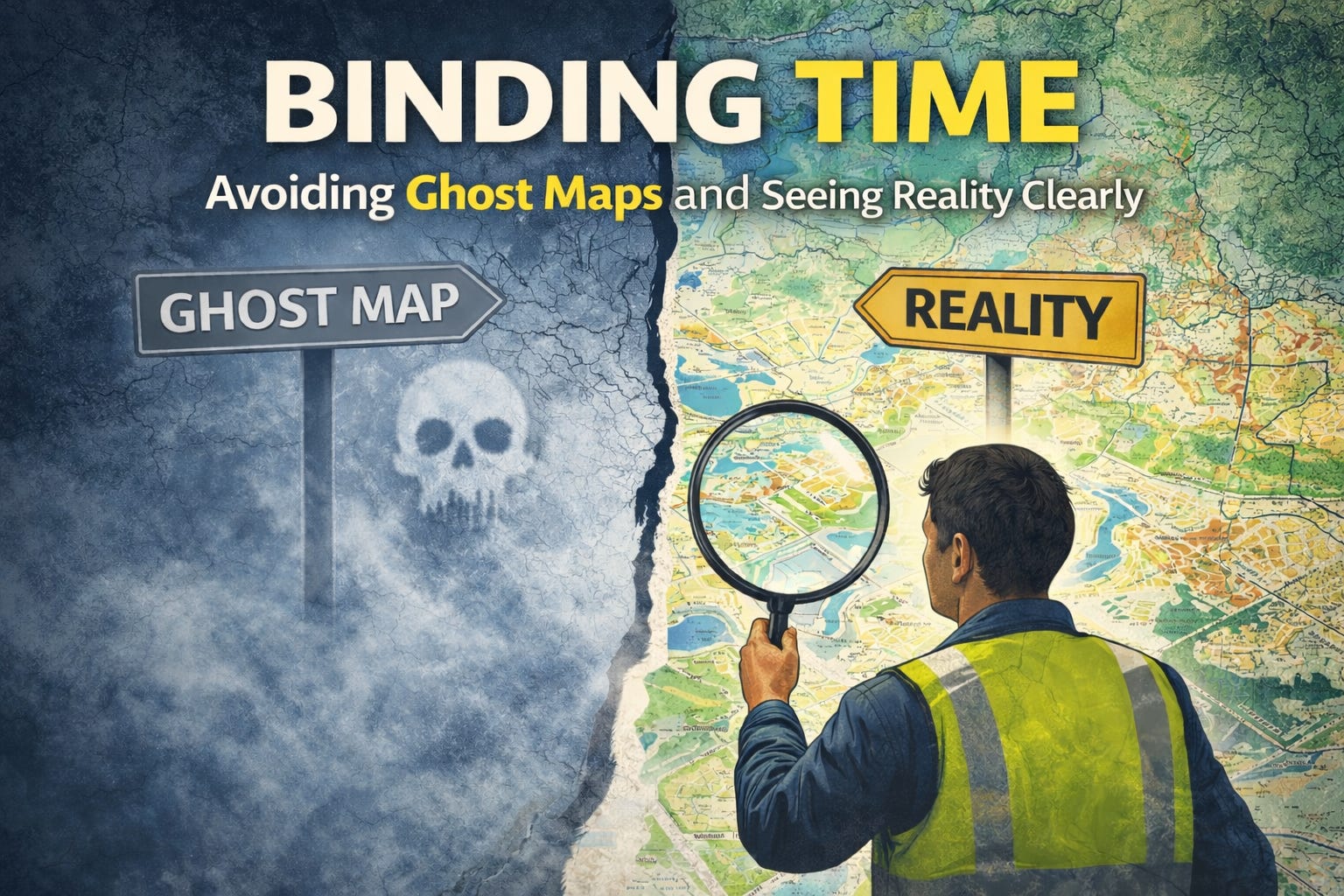
I want to be absolutely clear about something before we dig in: when I talk about a Ghost Map, I’m not blaming anyone for holding a particular position, or calling someone bad or stupid. What I’m examining — in this post and in my research more broadly — is the way our models of reality shape what we see, what we ignore, and how we interact with each other.
The idea of a Ghost Map matters because the maps we use to understand the world aren’t just representations — they drive behavior. If your map distorts the landscape, your choices will too.
Here’s why the post I saw is an example of that.
I scrolled past a plain, text-only card — the kind that looks like a quick thought tossed into the feed. No charts. No logos. Just a bold opener that sounded like a challenge: “Most of you are gonna tell me I’m wrong…”
I felt my shoulders tighten, like I’d been drafted into an argument I never signed up for. That reaction surprised me, because I carry both worlds with pride. I learned skilled trades in the Marine Corps as an engineer journeyman. Years later, I chased a doctorate because careful thinking matters to me, too. I cherish both.
The post didn’t bother me for respecting the trades. It bothered me for hinting at an invisible enemy — and for how easily that frame pulls attention toward conflict, which platforms reliably reward with reach and engagement.
At first glance, it looks simple and even reasonable. It’s pro–trade school. It’s pro–craft. I agree wholeheartedly with the conclusion it gestures toward: trades deserve real respect, serious pay, stable career pathways, and institutional investment.
But the Ghost Map lives in how the message is framed.
The opening line — “Most of you are gonna tell me I’m wrong…” — does something important. It preloads a fight. It suggests a nameless, unseen crowd that’s already hostile or dismissive. That crowd becomes the implied villain: “college people,” “elites,” “the credential class,” “the snobs.” The post never actually names these groups, but a vague enemy is easier for readers to project onto because it slots easily into pre-existing resentments. I don’t think the person who posted it meant it that way; however, the Ghost Map does all the heavy lifting.
That’s what a Ghost Map does: it compresses a messy reality into a tidy moral story that feels navigable. In the language I use in my research, a Ghost Map is a model that floats free from the territory it’s meant to describe — and still steers behavior.
What the Real Territory Actually Looks Like
When you zoom out, the landscape is more complex:
Many people with four-year degrees respect and rely on skilled trades. They hire tradespeople, build careers with them, and want clear pathways for young people.
Many skilled tradesworkers respect formal higher education and want their children to have multiple pathways.
The real challenges are structural: wage systems, benefits, licensing barriers, apprenticeship pipelines, school counseling resources, student debt dynamics, procurement practices, and where cultural prestige flows in society.
These are structures, not personalities.
A Ghost Map collapses those structures into a story about people. Instead of talking about wages or pipelines, it points at an undefined group — “you people.” Once that group exists, the reader gets a neat target for frustration, and the poster gets a clear identity signal: I’m brave enough to say it. Social platforms reward that posture because it drives comments, rebuttals, dunking, and performative agreement.
I’m not criticizing humans — it’s a critique of the incentive structures and attention economies that make this pattern so persistent.
There’s also a hidden assumption in the meme: that respect is a limited resource hoarded by one group and denied to another. But respect for skilled work isn’t zero-sum. A culture can hold multiple forms of excellence at once: the electrician who keeps a hospital running, the plumber who prevents disease, the carpenter who makes homes safe, the chef who feeds communities, the engineer who designs systems, the nurse who carries the human cost of care.
People Aren’t The Problem — It’s the Maps We Use
The frame nudges us away from that expanded view and toward a status battlefield: my tribe vs. your tribe. That reflex feels natural because we’ve grown up in economies organized around prestige sorting and credential inflation. But the problem isn’t the people — it’s the mental shortcuts we’re trained to adopt when we scan for enemies instead of incentives.
If you want a quick “cognitive immune system” check when you see posts like this, ask three questions:
Who is the “you”? Can you name the group? If it stays vague, the post is inviting projection.
What change is being demanded? Is it pay? Apprenticeships? Better counseling? Union access? Community college funding? If there’s no mechanism, it’s mostly identity theater.
What emotion is being recruited? Pride builds. Resentment recruits villains.
A Better Map
A better mental model keeps the respect and drops the enemy.
Here’s what that sounds like:
Trade schools deserve real investment and cultural prestige. So do universities. A healthy society needs both — and clear pathways between them.
That’s the shift from a Ghost Map to a usable map: fewer villains, more levers.