

At 11:19 a.m. on April 1, 2026, Donald Trump stood up from the front row of the Supreme Court gallery, motioned to those around him, and walked silently through the south vestibule. His motorcade departed shortly after.
That is what happened. Here is what five outlets reported.
Fox News said he “stayed for the entire oral presentation by his Solicitor General.” CNN called it an “early exit roughly halfway through arguments.” NBC said he “abruptly stood and left.” Newsweek went with “suddenly leaves in middle of arguments.” The Daily Beast led with “Humiliated Trump Storms Out of Catastrophic SCOTUS Hearing.”
Same doorway. Same walk. Five different events, built from the same set of footsteps, in the same building, within the same hour. Each version read as plain truth to the outlet that published it and plain distortion to readers of the others.
That is the phenomenon I study. A word, or in this case a single physical action, pulls people toward meanings that cannot both be right while everyone keeps believing they describe the same thing. I call these magnet words. The oral arguments in Trump v. Barbara gave me the cleanest civic-scale example I have on record.
The magnet word was “allegiance.”
Why this runs today.
I wrote this essay in April, hours after the oral arguments. Then I held it.
A prediction you publish before the result proves nothing. I wanted the forecast and the ruling locked in the same frame, so you could check one against the other. On June 30, 2026, the Court struck down Executive Order 14,160 and upheld birthright citizenship, 6 to 3, with Chief Justice Roberts writing for the majority.
A decision this size does not keep until the next open Monday. So it runs now, off the regular schedule, while the April forecast and the June record still sit close enough to read side by side. What I imagined is below, mostly as I built it. What the record held follows it.
What was actually at stake in the courtroom
On his first day back in office, January 20, 2025, President Trump signed Executive Order 14,160. It directed federal agencies to deny citizenship documents to babies born in the United States when neither parent is a citizen or lawful permanent resident. The order never took effect. Courts blocked it within days.
The legal question turns on five words in the Fourteenth Amendment: subject to the jurisdiction thereof. The citizenship clause reads, “All persons born or naturalized in the United States, and subject to the jurisdiction thereof, are citizens of the United States.” The challengers, backed by 128 years of precedent and a direct Supreme Court ruling in United States v. Wong Kim Ark (1898), argue that the phrase means what it has always meant. Stand on U.S. soil with U.S. law applying to you, and your children born here are citizens. The government offered a new reading. Jurisdiction, it said, requires permanent political allegiance established through domicile.
That word, allegiance, is where everything fractures.
The magnet word: two definitions, one courtroom
Solicitor General D. John Sauer spent much of his argument narrowing “allegiance” to mean permanent political belonging. A loyalty shown by establishing residence, putting down roots, committing to a long relationship with the country. Under that definition, tourists, temporary workers, and unauthorized immigrants would lack the allegiance needed to pass citizenship to their children.
The challengers’ attorney, ACLU National Legal Director Cecillia Wang, argued from the older common-law meaning. Allegiance is what you owe any sovereign whose territory you occupy. Stand on American soil and rob a bank, and American courts can arrest, try, and imprison you. That is allegiance. Territorial, automatic, immediate.
Justice Ketanji Brown Jackson pressed the point with a hypothetical. Travel to Japan and steal a wallet, and Japanese authorities can arrest and prosecute you. You would owe that legal system a form of allegiance, the duty to answer for your conduct, even as a visitor. That is what the word has meant in English common law for centuries.
Both definitions are real. Both carry history. And both sides treated their own as so obvious that the other could only come from incompetence.
Conservative commentators heard Jackson and concluded she wanted citizenship for tourists, which she never said. Fox News ran a standalone article about the “online uproar.” Breitbart’s headline put words in her mouth about tourists with local allegiance on vacation. Townhall embedded a tweet calling her a “DEI Justice.” Dana Loesch posted “Peak moron.” The Babylon Bee ran satire.
CNN described the same minutes as Jackson voicing “incredulity” at the order’s workability. TheGrio called her questions “critical.” The 19th reported that the court’s liberal women pressed the administration on how the order would actually work.
Two audiences watched one performance. Each left certain. The distance between their certainty is the magnet word doing its work.
The mechanism, in four phases
Meaning failures follow a four-phase arc I have tracked inside teams under pressure: Drift, Suppression, Repair Activation, Outcome. I built the phases to describe what happens in a conference room. April 1 showed they scale to a courtroom and a country.
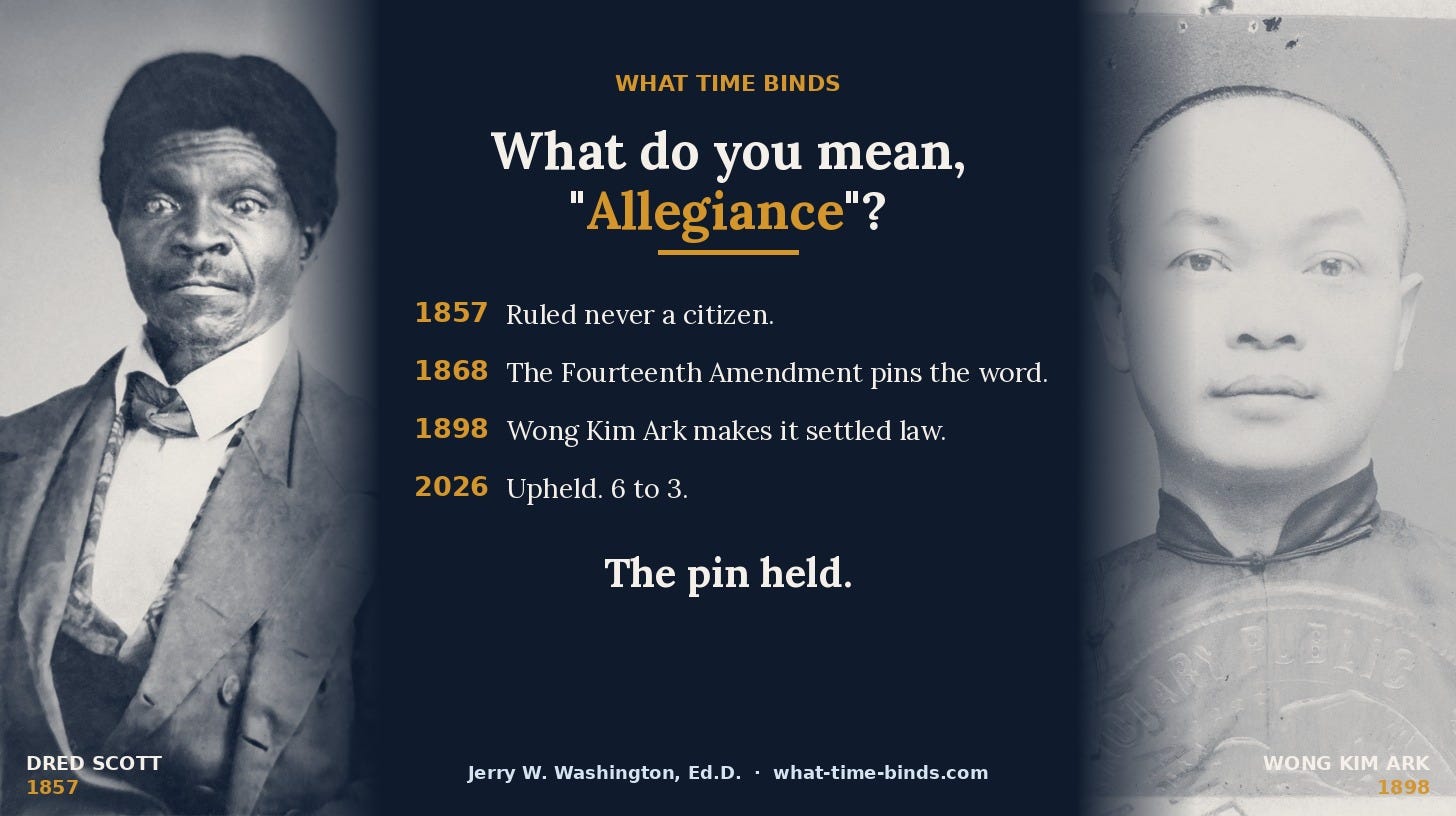
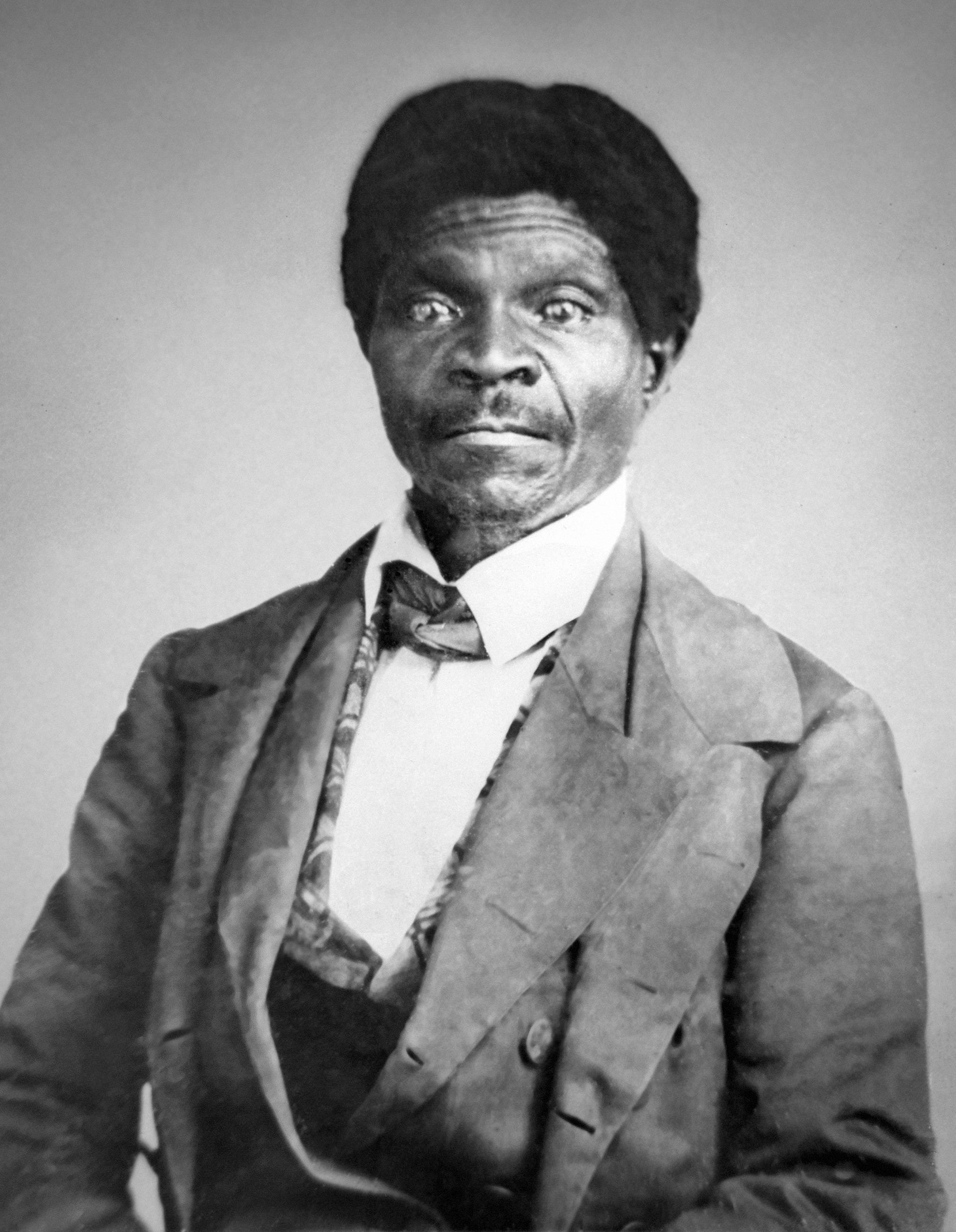
Phase 1. Drift. The ambiguity in “subject to the jurisdiction thereof” is 158 years old. The drafters wrote the phrase in 1868 for one purpose: to guarantee citizenship to formerly enslaved people after the Court’s Dred Scott decision ruled that Black Americans could never be citizens. The citizenship clause was infrastructure. A deliberate pin on the word “citizen” so that no later court or president could reopen the question.
The drafters used the qualifier to exclude two narrow groups: children of foreign diplomats, who carry sovereign immunity, and members of an occupying enemy force. That qualifier, precise in 1868, left a five-word gap. For 128 years the gap stayed closed. Wong Kim Ark sealed it in 1898. Congress reaffirmed the broad reading by statute in 1940 and again in 1952. The meaning held.

Executive Order 14,160 reopened the gap. It took “subject to the jurisdiction thereof” and proposed a definition, permanent political allegiance through domicile, that the drafters never used and that 128 years of law never endorsed. That is drift made visible. A stable meaning, fixed by precedent and statute, knocked loose by a new reading sold as a return to the original.
Phase 2. Suppression. The repair move is the hard question. Someone names the ambiguity or challenges the new reading. Suppression is the response that goes after the person instead of the substance. It is how drift gets protected from correction.
The coverage of Justice Jackson fits the pattern. Her arguments were specific and grounded: territorial jurisdiction, the World War II precedent in which babies born to parents officially declared enemies still received citizenship, enforcement questions about pregnant women and delivery rooms. The conservative media response mostly skipped past those arguments. Ridicule replaced them. Intelligence insults. “DEI” framing. Satire.
You can read the transcript and see what Jackson said. You can read the coverage and see what got attributed to her. The distance between the two is suppression running at media scale. The repair move gets made, and the system moves the audience from the content to the character of the person who made it.
Phase 3. Repair Activation. The oral arguments were, in form, a repair attempt. Nine justices working to pin five words. Several of the sharpest moves came from justices the sitting president appointed.
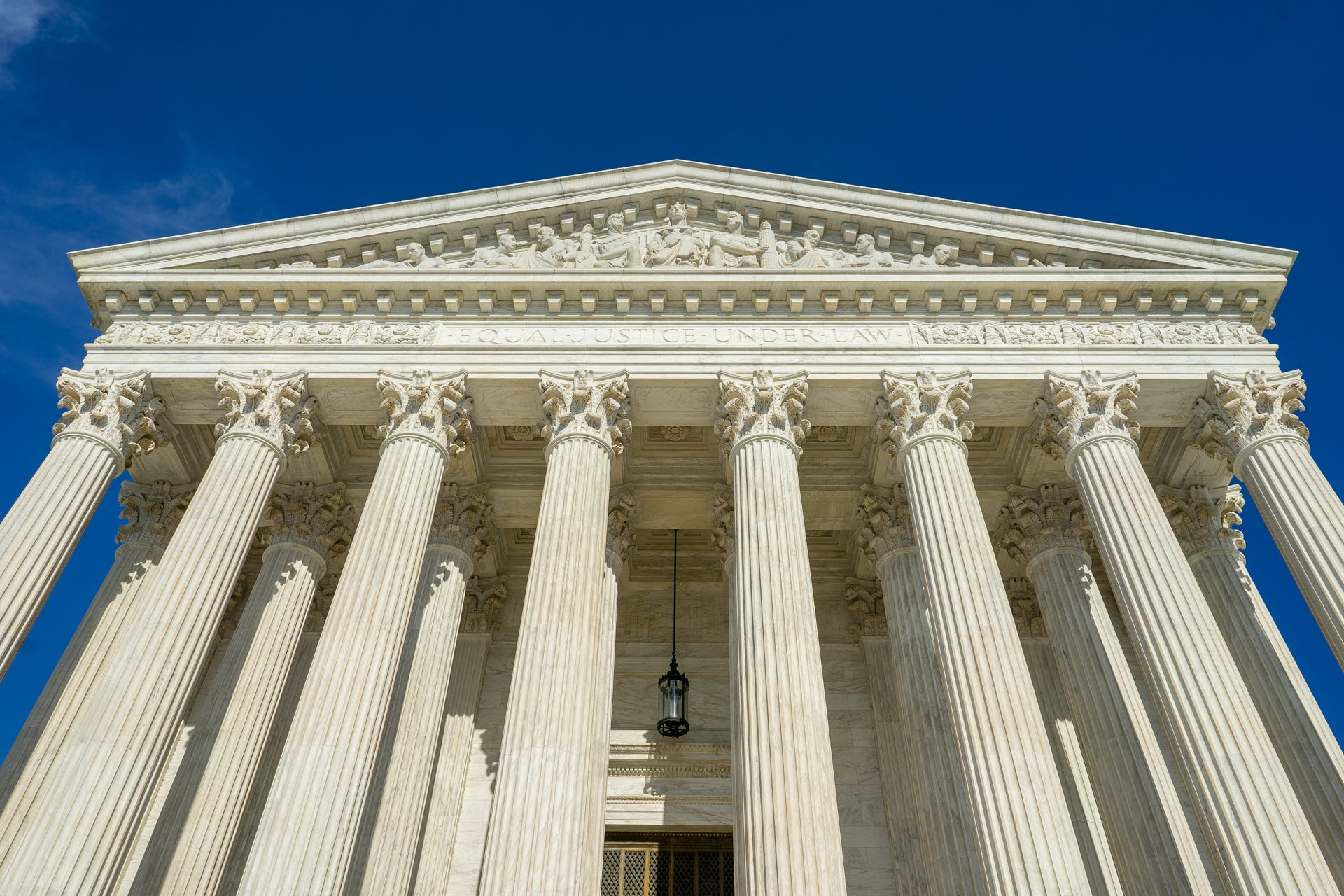
Chief Justice Roberts delivered the line of the day. When Sauer argued that the country faces “a new world” where billions of people are a plane ride from a child on U.S. soil, Roberts answered, “Well, it’s a new world. It’s the same Constitution.” The room laughed. Commentators called it the session’s turning point.
Justice Kavanaugh told the challengers’ attorney that under the traditional reading of Wong Kim Ark, “this is a short opinion.” More laughter, and a signal that the case might resolve cleanly.
Justice Gorsuch asked whether Native American children born today would be citizens under the government’s test. Sauer hesitated. “Uhh, I think so?” The question exposed a boundary failure. A definition of “allegiance” that cannot clearly include Native Americans breaks on a population whose citizenship is settled.
Justice Barrett pressed the deepest point. The Fourteenth Amendment was written for formerly enslaved people, brought to America against their will. They did not choose to come. They did not establish domicile by choice. They held no voluntary allegiance. Under the government’s own test, the people the amendment was built to protect would fail to qualify. Barrett asked the Solicitor General to answer that directly. It is the boundary test the case rests on, and it cuts one way.
Phase 4. Outcome. Here is where I have to show my work.
What I imagined, in April: the decision would land in late June or early July, and the government would lose, most likely 6 to 3 or 7 to 2, with Justices Thomas and Alito as the reliable votes for the order. I wrote that the ruling would not settle the meaning outside the courtroom. Both sides would leave certain, and the word “allegiance” would keep carrying two meanings in two Americas.
What the record held: on June 30 the Court struck down the order and upheld birthright citizenship, 6 to 3. Roberts wrote the majority, and he grounded it where the challengers did. Children born here to parents who are unlawfully or temporarily present are subject to the jurisdiction of the United States, and they are citizens at birth. He framed the result as keeping the framers’ promise, citizenship as “the right to have rights.” The call held where it counts, on the outcome.
The split outside the Court arrived on schedule. Within the hour, Trump posted that the ruling was “too bad for our Country” and that Congress can “easily make it up” through legislation. Outside the building, a representative from LULAC told reporters, “The Constitution was held today.” Same ruling. Two countries reading it. That was the part of the forecast I least wanted to be right about, and it held without revision.
Where I called it wrong
The dissent ran one vote deeper than I predicted, and that error is worth more than the parts I got right.
In April I placed Justice Gorsuch among the repair voices. His question about Native American children exposed the hole in the government’s test, and I read that as a justice working to pin the meaning. On June 30 he joined Thomas in dissent. Thomas wrote that the majority “devalues” citizenship and added, “I am not sure that today’s opinion will stand the test of time.” Gorsuch signed it.
So a justice named the boundary failure out loud, in open court, and then voted for the position that carries it.
That is not drift. Gorsuch saw the ambiguity clearly enough to put it to the Solicitor General. It is not suppression. He did not attack anyone for raising the problem. He raised it himself. It is a third thing, and the four phases do not yet hold a name for it. A decision-maker can make the repair move in the question and refuse the repair in the vote. Recognition without repair. Seeing the gap, and choosing it anyway.
I am going to take that apart in a separate piece, because it earns more than a paragraph and because it complicates a model I have spent two years building. For now, mark it. The repair move and the repair outcome are not one event. The distance between them is where authority does its quietest work.
The word in the dissent
Thomas reached for a word too. He wrote that the ruling “devalues” citizenship. The word does quiet work. It treats citizenship like a currency, something worth less once more people hold it. Constitutional status is not priced that way. It holds, or it does not, and it does not thin as it widens. And the phrase Thomas leaned on, that the Citizenship Clause “added greatly to the dignity and glory of American citizenship,” is Harlan’s, from his dissent in Plessy v. Ferguson, the opinion that called the Constitution colorblind. The language that once praised what the clause gave now does the work of narrowing who it reaches.
The strongest counterargument, and why the ruling sharpens it
The honest version of the government’s concern deserves a straight answer. Birth tourism is real. People do travel to the United States to give birth on American soil. The worry that the citizenship clause creates incentives the drafters could not foresee in 1868 is a fair question.
The order answered a real question with the wrong instrument. An executive order that redefines five words in the Constitution damages the infrastructure it claims to restore. The word “domicile” appears 161 times in the 160-page argument transcript. It appears zero times in the Fourteenth Amendment. The fix required inserting a concept the drafters did not use into a clause they wrote for a population the test would exclude.
If birth tourism needs a response, Congress can write a statute. That is the channel for new law, and here the ruling did something I did not expect. It pointed at that channel from the bench. Justice Kavanaugh, in the majority, suggested Congress may hold statutory room to act. Trump, within the hour, said the same thing from the other direction, calling on Congress to take it up. The legitimate path got named by a justice who struck the order down and by the president whose order fell. The counterargument, because the policy concern is genuine, makes the mechanism clearer. A real problem got used to justify a definitional move that fails on the amendment’s own terms.
Why this matters beyond the courtroom
The citizenship clause is infrastructure. It was engineered to fix one failure: a Court that ruled an entire population born on American soil were not citizens. The drafters did not leave the repair to goodwill or to later interpretation. They wrote it into the Constitution. They pinned the word “citizen” so the Dred Scott catastrophe could not run again.
The order attempted an unpin. It took a definition fixed on purpose after a catastrophic failure and tried to reopen it. The instrument was a magnet word. “Allegiance” pulls the conversation toward a new meaning that sounds reasonable in isolation and breaks on the exact population the amendment was built to protect.
The pattern is not unique to constitutional law. Teams run it too. An organization builds a clear definition of “ready” or “approved” or “aligned.” Then, under pressure, someone offers a new reading that sounds plausible and quietly drops the people or commitments the original was built to include. The word stays. The meaning shifts. And the person who notices gets told they are overreacting.
The repair move is always the same. Four words. What do you mean?
Repair Protocol: pinning “allegiance” (and any magnet word in your own rooms)
You probably do not have jurisdiction over constitutional law. You almost certainly have a version of “allegiance” running in your team right now. A word like “committed,” “bought in,” “on board,” or “supportive” that everyone uses and no one has pinned.
The pin. In this room, “allegiance” means being subject to the authority and obligations of a system while you operate inside it. It covers temporary participants. It covers people who did not choose to be there. It carries no demand of permanent loyalty, emotional enthusiasm, or agreement with every policy.
Includes: following the rules, answering for your conduct, taking part in the process. Excludes: lifetime devotion, unconditional agreement, identity-level belonging. Revisit when the scope of who counts is about to change, when new members join, when roles shift, or when a decision redraws a boundary.
Six prompts for your next meeting.
What word are we all using right now that we have not defined?
If I asked each person here what that word means, would I get the same answer?
Who is inside our definition? Who falls outside it? Is that what we intend?
Does our definition still serve the people it was first built to serve?
When did this word last mean two different things to two people in this room, and what did it cost?
Can we write down what we mean by this word, right now, so the people who come after us inherit the map?
Scripts.
For a team lead: “I want to pin one word before we move on. When we say ‘committed to this project,’ do we mean ‘will prioritize it over competing work’ or ‘emotionally invested in its success’? Those lead to different behaviors. Let’s pick one for today.”
For a direct report: “I want to track what you mean. When you say ‘this needs to be done soon,’ are we talking this week or this quarter? I will build my plan around whichever one you mean.”
For a peer: “I think we are using ‘aligned’ to mean two different things. Can we take 30 seconds and each say what alignment looks like by Friday?”
For a spouse or family member: “When you say you need me to be more supportive, I want to get it right. Do you mean be present and listen, or help solve the problem? I will do either. I want to do the one you actually need.”
For yourself: “Am I assuming this person means what I mean by this word? What would I learn if I asked?”
Definition log. After you pin a term, write it where the people who come after you will see it. A shared doc, a whiteboard, a channel header, a sticky note on a monitor. The format is plain.
Term: the word you pinned. In this room it means: the definition you agreed on. It includes: what is covered. It excludes: what sits outside the boundary. Decided by: who was in the room. Date: when you pinned it. Revisit when: what triggers a re-pin, such as new members, a scope change, or the next quarter.
The log is the artifact that makes the repair last. Without it, the pin dissolves inside a week and the word drifts back to whatever meaning suits the person with the most power in the room.
Reflection questions.
Think about a word your team uses constantly: “priority,” “urgent,” “done,” “ready.” If you asked everyone to define it, would the answers match? What does the gap tell you?
Have you watched someone raise a real concern in a meeting and seen the group question the person’s judgment instead of the concern? What happened to the concern afterward?
When did you last use a word in a conversation and learn later that the other person heard something else? What did it cost in time, trust, or rework?
The return
At 11:19 a.m. on April 1, a president walked through a doorway, and five outlets built five realities from the same footsteps.
In a courtroom, nine justices spent two hours trying to pin five words written 158 years ago to repair a catastrophic failure of meaning. The drafters knew what they were doing. They pinned “citizen” because they had seen what happens when the word drifts, when it gets read to exclude the people it was built to include.
I asked, in April, whether the pin would hold. On June 30 it held, 6 to 3. A representative outside the Court put it in four words a Marine can respect. The Constitution was held today.
It held in the room with the marble and the robes. Whether it holds in the rooms where the rest of us carry authority is a separate question, and no Supreme Court answers it. We do. In the conference room. At the kitchen table. Every time a word starts carrying two meanings, and someone decides whether to stop and ask.
Four words. Every time.
What do you mean?
If this landed, the work goes deeper.
Every essay here draws from an active advisory practice. I work with learning and development directors, workforce administrators, and education leaders on the same problem from the other side: not the analysis, but the repair. Diagnostics, workshops, and standing advisory engagements through jerrywwashington.com. A 30-minute call costs nothing.
Sources
Supreme Court of the United States, Trump v. Barbara, decided June 30, 2026 (confirm official docket number before publication)
Supreme Court oral argument transcript, Trump v. Barbara (April 1, 2026)
NPR, “Supreme Court upholds birthright citizenship on constitutional grounds” (June 30, 2026)
The Washington Post, “Birthright citizenship upheld by Supreme Court, ruling against Trump’s order” (June 30, 2026)
CNN, “Supreme Court upholds birthright citizenship” (June 30, 2026)
CNBC, “Supreme Court upholds birthright citizenship, blocks Trump order” (June 30, 2026)
NBC News, “Supreme Court strikes down Trump birthright citizenship order” (June 30, 2026)
NAACP Legal Defense Fund, “Know Your Rights: Birthright Citizenship” (June 30, 2026)
SCOTUSblog, “Supreme Court appears likely to side against Trump on birthright citizenship” (April 1, 2026)
David Lat, “5 Observations On The Supreme Court Argument In The Birthright Citizenship Case,” Original Jurisdiction (April 1, 2026)
CNN, “Takeaways from the Supreme Court arguments on Trump’s effort to end automatic birthright citizenship” (April 1, 2026)
Fox News, “Justice Jackson sparks online uproar after linking birthright citizenship to stealing a wallet in Japan” (April 1, 2026)
The 19th News, “Ketanji Brown Jackson, Supreme Court justices question birthright citizenship case” (April 1, 2026)
Lawfare, “Slavery and Birthright Citizenship” (March 2026)
Brennan Center for Justice, “Birthright Citizenship Shouldn’t Be Up for Debate” (2026)
Jerry W. Washington, Ed.D., is the founder of What Time Binds. A retired Marine Corps Master Sergeant and USC Rossier graduate, he studies how teams and institutions fail when people use the same words and mean different things under pressure. His scoping review on meaning repair synthesizes 131 academic sources across eight disciplines. He teaches project management at the University of California, Irvine, Division of Continuing Education.
Start the free Meaning Repair course → what-time-binds.com